Wednesday, November 28, 2018

Thanksgiving Essay

Although the United States celebrates Thanksgiving every year, we do not know as much about it as we think we do. As research has shown, half of the ideas people are being taught about Thanksgiving are false myths such as the idea that “Thanksgiving” was the first time that the indians and the pilgrims feasted together, they had turkey on the first Thanksgiving, and that “Thanksgiving has been around forever. We need to be more educated about our country and its background so that we can stop lying to ourselves and so we can start properly learning about and celebrating traditions like these.

To settle one of these myths about Thanksgiving, in the article Everything you Learned about Thanksgiving is Wrong, Maya Salam touches on the fact that this event wasn’t even called “Thanksgiving” until the 1830’s when the New Englanders decided to call it that. In 1863, President Lincoln made Thanksgiving an official, national holiday. He did this as a “thank you for civil war Victories”, stated Salam. So contrary to the worldwide belief that Thanksgiving has been around forever, it has only officially been around since 1863.
Thanksgiving didn’t just happen out of nowhere because two different groups of people ate together, a large part of it becoming a national holiday is because people worked for it to be. In the article Abraham and the Mother of Thanksgiving, Maranzani states that Sarah Josepha Hale is “the Mother of thanksgiving”. After growing up ritually celebrating Thanksgiving, Hale published a book called Northwood: A Tale of New England. This showed how much of a committed advocate she was for women’s education. Another thing that shows this is how she consistently wrote and published editorials about the holiday, lobbying to make a “national holiday of thanks”. She did all of this with the hope that it would eventually settle all of the disagreements between the North and the South and maybe even come to unify them. So again, contrary to the belief that Thanksgiving has always been around, people like Sarah Josepha Hale had to work to get this to become a celebrated national holiday.
Along with these two myths, there is also the myth of what the pilgrims and indians ate at this giant harvest of theirs. It is believed by the majority that the indians and the pilgrims had the best feast with a giant turkey and delicious cranberry sauce, when in reality, they only had deer and harvest foods such as corn. The reason we believe this is because of all the marketing that goes into Thanksgiving. Whenever November rolls around, people suddenly get the craving for turkey and cranberry sauce and all of the “traditional Thanksgiving foods”. Why do you think this is? It is because of all of the marketing. From the start of November to Thanksgiving we see TV ads, newspaper articles, and billboards of this giant Thanksgiving feast which of course includes a giant turkey. In the article The Invisible Way that Marketers Set the Menu for Your Thanksgiving Feast, Smithsonian says that marketers not only help create many of the rituals and cultural myths associated with the Thanksgiving meal, but they also legitimized and maintained them. So not only did we get wrong when and how Thanksgiving started, but also what they actually ate at the First Thanksgiving.
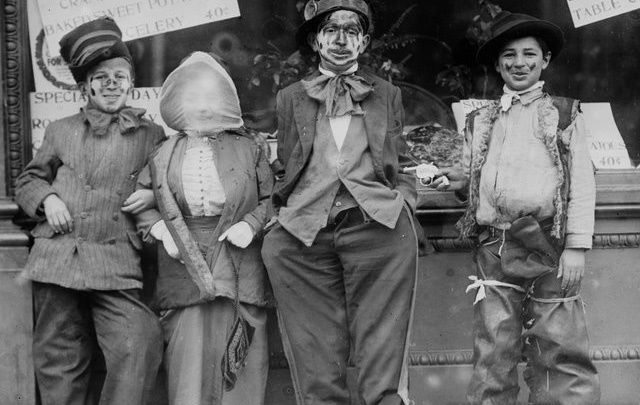
Ragamuffin Day is still celebrated each year with a Thanksgiving parade in Bay Ridge, Brooklyn.

Tuesday, October 30, 2018

12 Years a Slave

12 Years a Slave Film Review ( Rolling Stone )  

In this review from the Rolling Stone, Peter Travers talks about how a free black man mistakenly takes a job in Washington but later finds out that he was captured into slavery. "Ancient history?" says Travers, "Only if you believe that freedom has lost its fragility in the modern world." Travers says that people have kind of lost what the real definition of freedom. Since some people have had it for all of their lives, it is taken fro granted. Like Solomon, he took his life of being a free man for granted and when he a free man, then when he became a slave he was shocked and realized that he took his free life for granted. 


Image result for 12 years a slave film

Tuesday, October 23, 2018

Primary Source Analysis

Incidents in the Life of a Slave Girl, by Harriet Ann Jacobs 

In this primary source, the author is Harriet Ann Jacobs. She tells her life story about how she was born into slavery, but escaped.

She starts out with a notice to the readers. She says that even though some of these events are very dramatic and incredible, they are nonetheless true. She also tells the reader to try and look at these events from her perspective and the situation that she was in.

She touches on how she thought she was born free, but she was really born a slave. She thought this for 6 years. She also talks about how there is a Slaves' New Year day. This is where they receive their new jobs and new masters.

Friday, October 19, 2018

Newspaper Article

Tri-Weekly Standard Newspaper (North Carolina) 

This Newspaper is from North Carolina, which is a state that played a great role in the Reconstruction. This article starts out by saying how it is hopeless for reconstruction in the south. Then it goes on to say how people need to be more involved in their state's reconstruction. It also says that they don't want to have Reconstruction through violence. Then he starts talking about how Reconstruction will help the community. Then he questions it. Then he ends with how people accept the good faith of Reconstruction.

Paraphrase Practice

Lincoln Movie Review ( rogerebert.com )

"Lincoln lacked social polish but he had great intelligence and knowledge of human nature. The hallmark of the man, performed so powerfully by Daniel Day-Lewis in "Lincoln," is calm self-confidence, patience and a willingness to play politics in a realistic way. The film focuses on the final months of Lincoln's life, including the passage of the 13th Amendment ending slavery, the surrender of the Confederacy and his assassination. Rarely has a film attended more carefully to the details of politics." 

My paraphrase of this passage:
Lincoln possessed a large sum of knowledge about the art of interacting with people. Though he may have been a little informal with how he handled politics, he got the job done. The retired English actor, Daniel Day-Lewis, who played Lincoln in this film, reflected many great characteristics of Lincoln such as people skills in both the political world and outside of it. This film carefully depicts the events leading up to end of Lincoln's life which include him pursuing the amendment to abolish slavery, Robert E. Lee agreeing to stop the war, and of course Lincoln being shot in a theater. This is one of a select few films that go deep into the bits and pieces of the political world.

Thursday, October 4, 2018

Reconstruction

Why did Reconstruction come to an end in 1877?
-The Compromise of 1877 ( apstudynotes.org )

The Reconstruction came to an end in 1877 because of The Compromise. When Ulysses S. Grant won the election, he found out that it wasn't necessarily what he had in mind. Being in charge of the US was vastly different that being in charge of a military. This led to the country having financial problems which led to Grant having to make a Compromise to save the Us from being in debt.

Tuesday, September 25, 2018

Lincoln Questions

Lincoln Questions


                                       1384885243500.cached
President Lincoln: Celebrate President Lincoln's Birthday  

1. Lincoln was "uncompromising" because he would not step back from the 13th Amendment being passed. Thaddeus Stevens was "uncompromising" because he would say that he thinks all men are equal then change it to only under law. They were willing to compromise on the good of the people but they weren't able to compromise on every single thing that Lincoln wanted for the abolishment of slavery.
2. The movie showed how Lincoln was always against slavery, like in the letters, and they showed his emotions towards it like when he slammed his fist down on the table out from running out of patience on getting the last two votes.
3. Lincoln believed that the 13th Amendment was essential because it would end slavery for good, unlike the Emancipation Proclamation. He also told the people that it would "end the War".
4. The film complicated that the South was for slavery and the North against it by having characters from both places voice their opinion on the matter to Lincoln or a Representative.
5. People seemed to resist the end of slavery because they were afraid that the freed slaves would be fired up and rebel against them and take over. The film showed this by a wife and her husband talking to Lincoln about how if the War ended before the vote for the Amendment then they probably would not vote for it but if the War was still going on when the vote came around then they would.